Background: Shorts International’s trade mark dispute with Google over YouTube Shorts
Shorts International Ltd (“SIL”) is a producer and broadcaster of short films which it streams via its ShortsTV television channel. SIL owns UK registrations for the following five marks covering goods and services in Classes 9, 38 and 41.
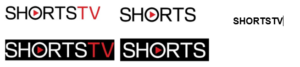
The four figurative marks date back to 2018, and the word mark dates back to 2019.
In 2021, Google LLC, launched its YouTube Shorts service in the UK, which shows user-generated short form vertical videos designed for viewing on mobiles phones. Prior to September 2024, these videos could be up to a maximum of 60 seconds in length, though this has now been increased to 3 minutes. Google uses the word “shorts” as part of the name YouTube Shorts, as part of the following logos, and as a standalone word:

SIL alleged that each of these uses infringed its marks under Sections 10(2) and 10(3) of the Trade Marks Act 1994, and amounted to passing off. Google denied trade mark infringement and passing off, and claimed that it had a defence under Section 11(2)(b) as, essentially, its use of the word “shorts” amounted to use of a non-distinctive sign in accordance with honest practices in industrial or commercial matters. By way of counterattack, Google filed invalidation actions against all five of SIL’s registrations on the grounds that the marks lack inherent distinctiveness, as well as non-use revocation actions. SIL denied that its marks lacked inherent distinctiveness and, in any event, alleged that the marks had acquired distinctiveness through use. Moreover, they argued that to the extent that the marks were deemed devoid of inherent or acquired distinctiveness, this could be remedied by adding a limitation of “save for short films” to their specifications.
High Court judgment: why Google’s use of “Shorts” did not infringe the SHORTSTV marks
In its judgement, the High Court held that the meaning of the word “Shorts” extended beyond “short films”, and also included other short-form audiovisual content. It was therefore held that SIL’s SHORTSTV mark was invalid for most goods/services on the grounds that its registration was contrary to Section 3(1) of the Trade Marks Act 1994. The judge rejected the fallback argument that the proposed limitation would remedy the descriptiveness/non-distinctiveness issue. Whilst SIL’s figurative marks were held to be valid, it was noted that the marks were of low inherent distinctive character and that the use of the marks in the UK had not been extensive enough to enhance that low distinctive character. Moreover, SIL’s registrations were cancelled on the grounds of non-use for some goods and services.
Turning to the alleged infringement, it was held that Google had used the word “Shorts” both as an indicator of origin (i.e. as part of a figurative logo, with or without the “YouTube” element) and in a purely descriptive sense (i.e. use of the standalone word). However, it was held that none of these uses of the word “shorts” gave rise to a likelihood of confusion. Whilst it was noted that “significant similarities” existed between the parties’ respective marks, it was held that the similarities concerned elements that were descriptive and not those which gave SIL’s earlier marks their (low) distinctive character. Moreover, whilst it was held that the similarities between the marks would lead to a link being formed in the minds of the limited group of consumers for which SIL’s marks had a reputation, Google’s use of its marks would not cause damage to the reputation or distinctive character of SIL’s marks. Finally, whilst SIL had goodwill in their marks amongst a limited group of consumers, Google’s use of its signs was not found to misrepresent its services as being in any way associated with SIL. As such, no passing off was found.
Shorts International’s grounds of appeal in the YouTube Shorts trade mark case
SIL sought to appeal most of the judge’s findings (with the exception of the decision regarding the passing off claim and the partial revocation of its figurative marks), advancing 12 grounds of appeal. Ground 1 related to the meaning of “shorts”, grounds 2 and 3 challenged the invalidity of the SHORTSTV mark for some goods and services, grounds 4-10 challenged the findings of non-infringement under Section 10(2) and grounds 11 and 12 challenged the findings of non-infringement under Section 10(3).
What does “shorts” mean in UK trade mark law?
SIL contend that the meaning of “shorts” in the relevant context is “short films”, i.e. films that are “just like feature films on theatrical release, but shorter”. SIL attempted to advance an argument that in the minds of the average consumer, who are familiar with the registered mark, the meaning of the word “shorts” would be “short films” and so the use by Google in relation to goods other than short films (i.e. user generated videos of less than 60 seconds), should not be regarded as being descriptive in the same sense, i.e. if one use is describing short films and the other short audiovisual content, then the descriptive meanings are not the same and so consumers would not disregard the common “SHORTS” element as being descriptive, such that a likelihood of confusion does exist.
However, these arguments were dismissed. It was held that whilst the average consumer is someone familiar with the mark, it does not follow that the average consumer is therefore someone for whom the word “shorts” would mean only “short films”. Instead, the trial judge’s finding that the meaning of “shorts” includes both short films and other short form audiovisual content was upheld, and so no error of law was found in his conclusion that the average consumer would recognise that the similarity between the parties’ marks arose from use in relation to goods for which the common verbal element was descriptive. Ground 1 was dismissed.
Section 10(2) trade mark infringement: no likelihood of confusion between SHORTSTV and Google’s Shorts / YouTube Shorts marks
SIL contended that the trial judge’s overall assessment that the placement of the play symbol in SIL’s figurative marks was sufficient to dispel confusion was “rationally insupportable”. However, upon reviewing the elements of the decision that led to this finding, it was held that the trial judge arrived at this decision following his rejection that SIL’s figurative marks were invalid. Indeed, the trial judge held that whilst the verbal element “SHORTS” and the play symbol were descriptive and the font and contrast between the lettering was insignificant, the overall impression of the marks, comprising the combination of the word and the red play symbol located inside the “o” of “shorts” was sufficient to give the marks enough distinctive character to render them registrable. However, when it came to the question of infringement, the fact that these distinctive elements were not present in Google’s mark led the judge to conclude that there was no likelihood of confusion between the marks. On appeal, it was held that there was nothing about this reasoning that was rationally unsupportable, and so SIL’s grounds of appeal under Section 10(2) were dismissed.
Section 10(3) trade mark infringement: why SHORTSTV’s evidence of reputation was not enough
SIL contended that the trial judge has erred in his assessment of the evidence, and that the judge ought to have held that the evidence was sufficient to show a reputation for at least short films. However, it was held that SIL’s evidence of reputation was “paper thin”. As such, the trial judge’s conclusion that the marks were not known by a significant part of the relevant public was upheld. Indeed, the evidence was held to be so weak that it did not even support a conclusion that the mark would have a reputation for short films. The grounds of appeal under Section 10(3) were therefore dismissed.
Was SHORTSTV a valid trade mark for short-form audiovisual content?
The trial judge had held that the SHORTSTV mark would be understood as referring to short-form audiovisual content available via televisual means and so was invalid for the majority of goods/services for which it was registered on the basis that it was descriptive of a characteristic of the relevant goods/services. The only goods/services for which the mark was not invalid, were not goods/services relied on in the infringement action. SIL’s appeal challenged this finding, contending that the mark was inherently distinctive and, in any event, ought to have been found to have acquired a distinctive character through use. Moreover, SIL appealed against the rejection of the proposed limitation of “save for short films”.
On appeal, it was held that the trial judge had considered and addressed all of SIL’s arguments, and had sound reasoning for rejecting them. As such, the appeal judge upheld the trial judge’s decision that the SHORTSTV mark was descriptive/non-distinctive for the majority of goods/services covered by the registration. Likewise, it was held that the trial judge had conducted a thorough review of the evidence and his conclusion that the mark was not known by a significant proportion of the relevant public and had therefore not met the threshold for having acquired a distinctive character, was one that he was entitled to reach from his review of the evidence.
Finally, the judge turned to SIL’s argument that their proposed limitation should not be rejected. However, the judge agreed with the trial judge’s analysis that there is no clear definition of “short films” and, in any event, the word “shorts” encompasses a wider range of short-form audiovisual content than just short films, and so the proposed amendment did not go far enough. As a result, the appeal was dismissed on these grounds.
Court of Appeal outcome: Shorts International’s appeal dismissed in full
As all of its grounds of appeal were dismissed, SIL’s appeal failed in its entirety.
Key lessons for owners of trade marks containing descriptive elements after Shorts International v Google
It is very common before the UKIPO for marks which would otherwise be regarded as exclusively descriptive and/or devoid of distinctive character to achieve registration as a result of the inclusion of distinctive verbal, figurative and/or stylistic elements. This case therefore serves as a useful reminder as to the scope of protection afforded to such marks. Where a mark has achieved registration as a result of additional distinctive elements, it is those elements in which the mark’s protection lies, and not in any elements which would otherwise be regarded as descriptive or non-distinctive. Whilst it is very tempting for owners of registrations of otherwise descriptive marks to attempt to enforce those registrations against third parties using the same descriptive elements, unless the descriptive elements of those marks have acquired distinctiveness through use, a likelihood of confusion is unlikely to be found to exist.
If you have any questions about the matters discussed in this article, please contact Trade Mark Associate Joanna Caplan.